

Expert Advice: Why Switch Your Hot Tub from Traditional Chlorine to FROG® @ease®
On the fence if you should change out from traditional chlorine? Learn the difference from traditional chlorine and FROG @ease!
Find A Dealer
Summer’s here, the days are longer and you can practically hear the pool calling your name. There’s nothing better than sunny days, cool water and floating the afternoon away. But before you jump in, it’s normal to have a few pool care questions on your mind. Don’t stress, we’re here to give you answers.
We’ve rounded up the most common (and a few you might not have thought to ask) questions about pool care and our simple answers to get your summer off to a splashing start. Let’s go!
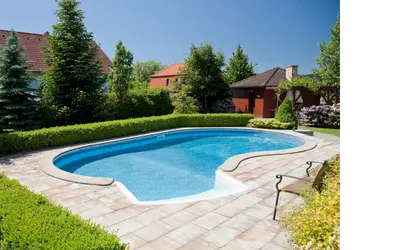
It’s better to open your pool earlier rather than later. It’s not about the month, it’s about the temperature for the region you’re located in.
It’s best to open your pool before your water temperature reaches 60º. Or, open it when the outside daytime temperature stays consistently above 70º.
Why?
When a pool is closed, the water is stagnant since the pump isn’t operating. And, when the water temperature rises above 60º, algae growth is set into motion. Don’t give it a chance, open your pool even if you don’t plan to use it; it’s easier to maintain it once it’s opened than to let it sit stagnant.
For detailed Pool Opening steps, read our “How to Conquer Pool Opening” blog here.
Great question! It’s water balance. Balanced water is the key to consistently clean, clear water.
Balanced water means that the chemical levels in your pool are in harmony; in other words, the water’s chemical levels are in the ideal ranges.
To maintain balanced water, focus on keeping the top three chemistry levels within their ideal ranges.
Total Alkalinity: 80 – 120 ppm
pH: 7.2 – 7.8
Total Hardness: 200 – 400 ppm
Water Care Expert Tip: Use our FREE FROG® Water Balancing Guide to balance your pool easily!
We also have a detailed blog on Pool Water Balancing, read it by clicking here.

In addition to maintaining water balance, sanitizer levels are essential to keeping pool water clean and clear. You must have enough chlorine in the water to kill bacteria and viruses; the industry standard for an all-chlorine pool is 1.0 ppm – 4.0 ppm.
Too much chlorine is irritating to skin, eyes, hair, bleaches swimsuits and can damage surfaces. Too little chlorine won’t adequately kill bacteria and viruses, making water not safe to swim in.
It’s a great idea to find the option that’s right for you and your pool habits. We recommend Pool FROG® to sanitize your pool. Pool FROG helps keep water Cleaner, Clearer and Softer®. Plus, it kills bacteria 2 ways, with a low amount of chlorine and FROG Sanitizing Minerals®.
This combination means you use up to 50% less chlorine* so your swimsuits don’t fade, and surfaces are protected.
Plus, FROG Sanitizing Minerals conditions the water for softness and absorbs acids for a more stable pH.
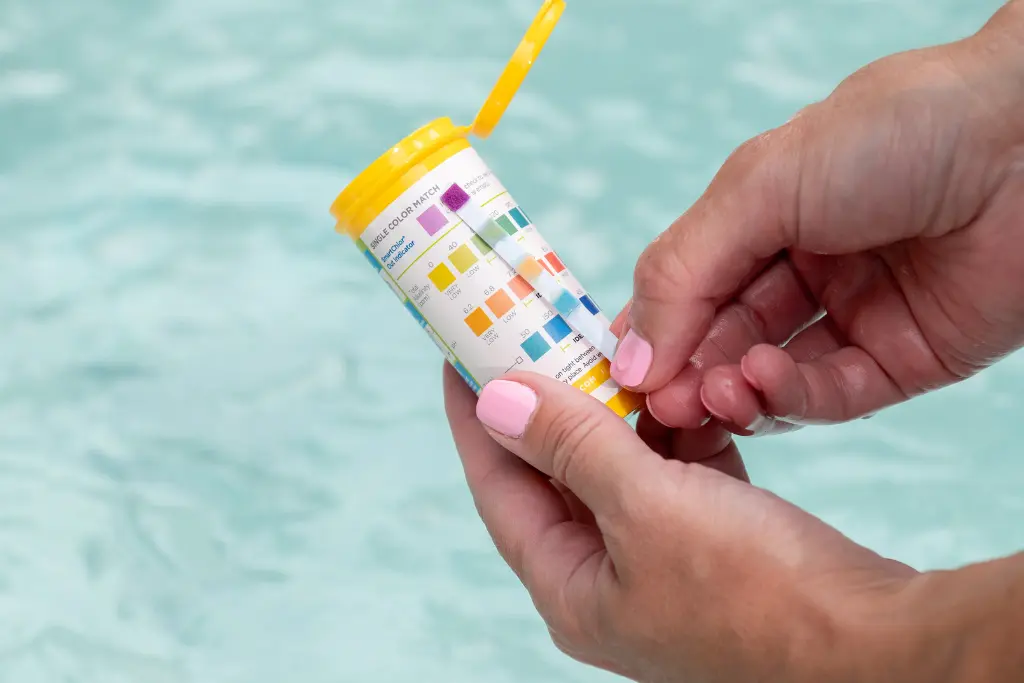
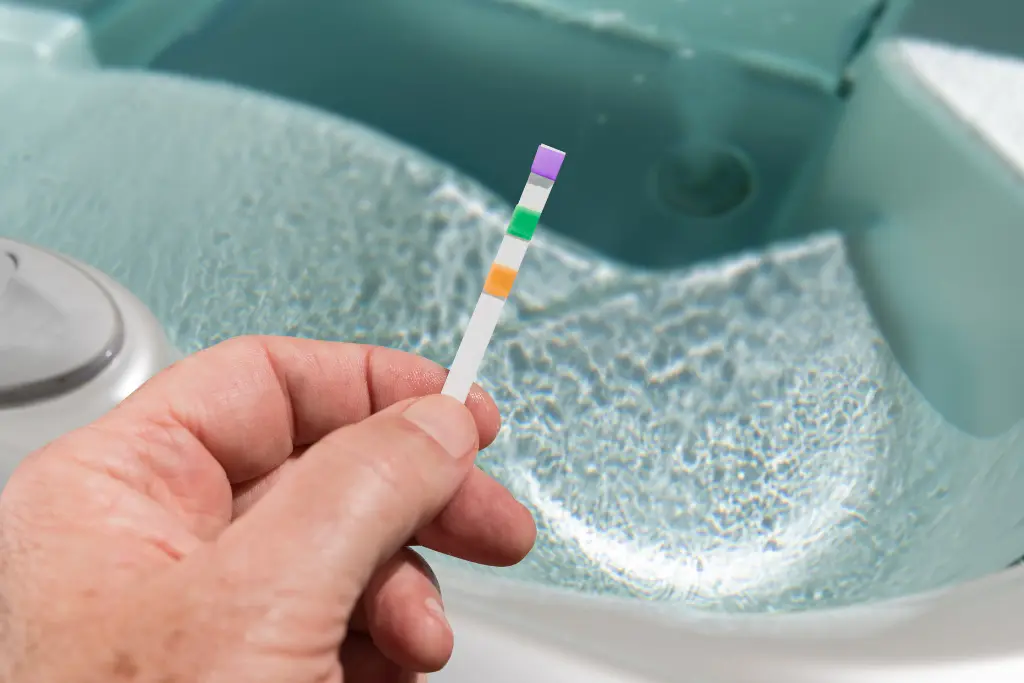
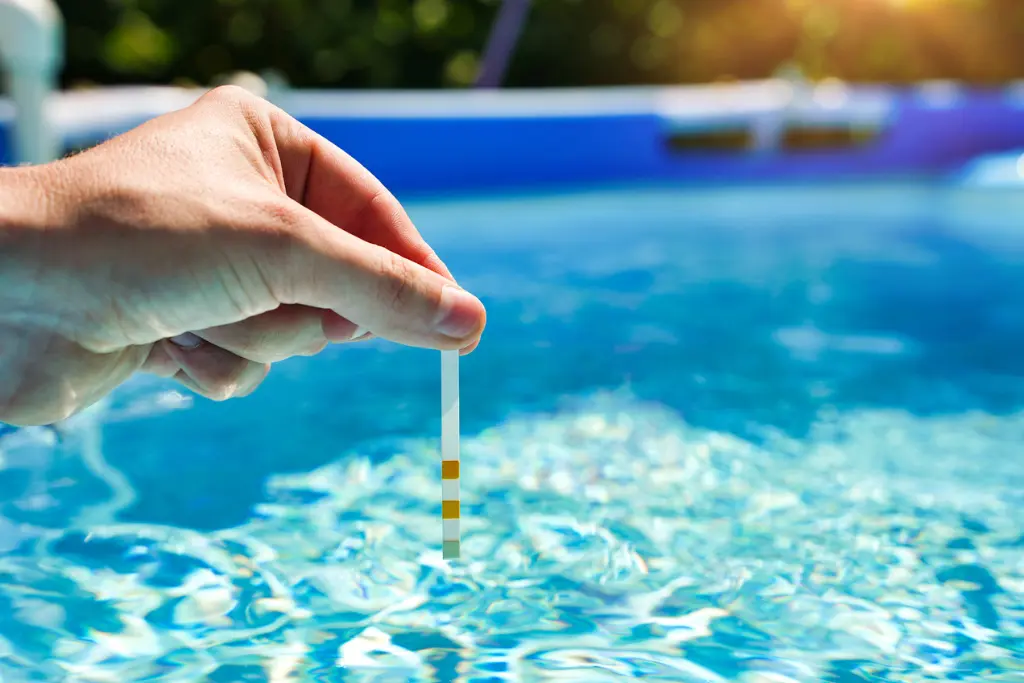
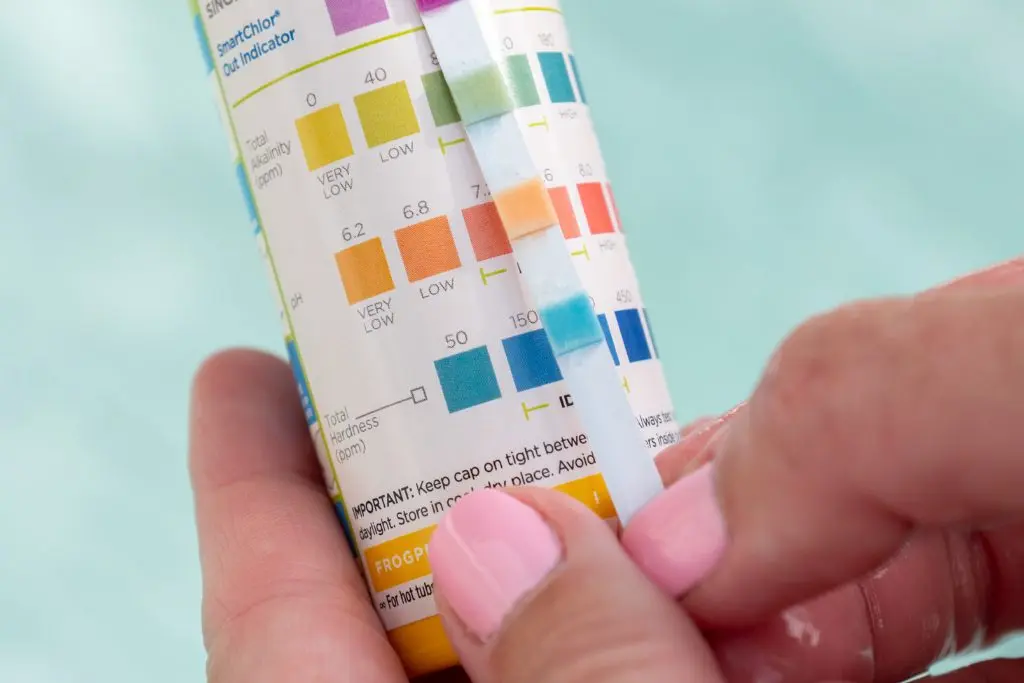
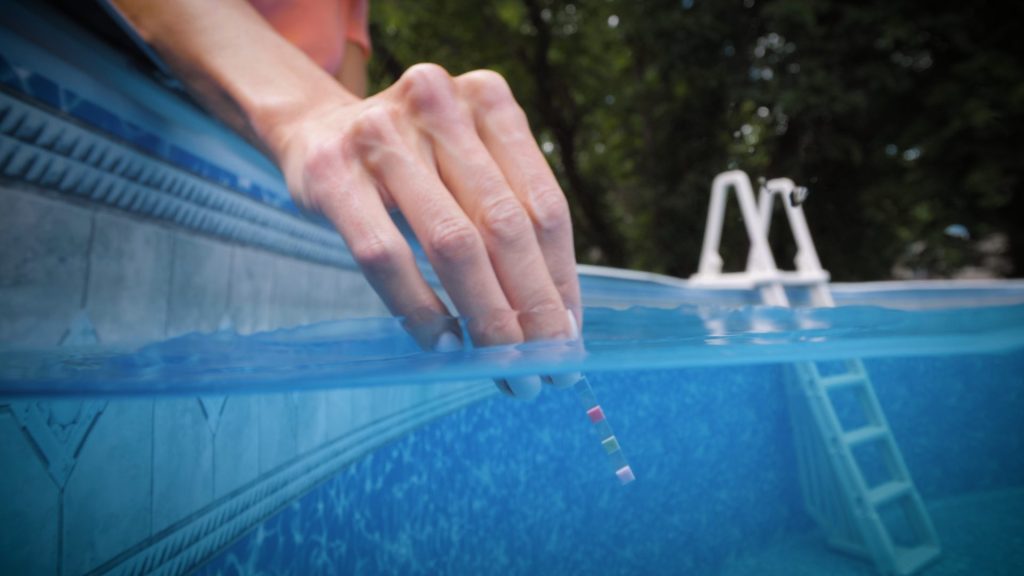
Water testing is the foundation of proper pool maintenance. Why? Because it keeps you in the know on how your pool water is doing. Testing your water regularly allows you to monitor the key factors we mentioned above: Chlorine, Total Alkalinity, pH and Total Hardness.
If you use FROG Products, you should test your pool at least once a week. If you don’t use FROG, it’s best to test at least twice a week. For all pools, it’s important to also test after storms, heavy use or when you top off the pool with fresh water.
Weekly shocking is typically recommended for all pools! In addition, it’s smart to shock again after heavy use or rain. Be sure to follow the manufacturer’s directions for use.
Your pool pump circulates and filters pool water. Running the pump for an adequate amount of time each day – we recommend at least 8 hours – is essential to ensure the water is properly circulated and filtered, preventing algae and bacteria growth.
All the water in your pool must run through this filtration process at least once a day to keep your pool clean, clear and ready for action.
Aim to run your pool’s pump for at least 8 to 12 hours of circulation per day, adjusting as needed based on the size of your pool and the climate in your area!
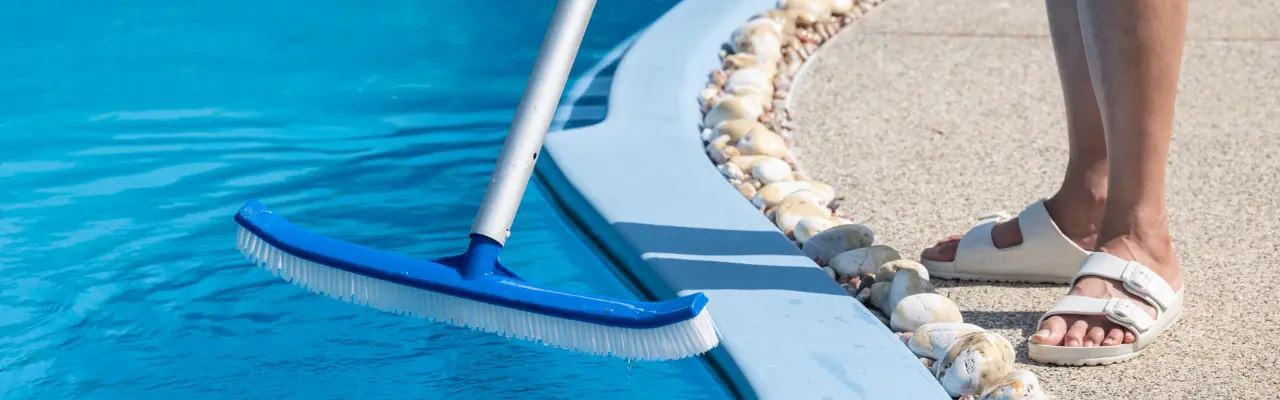
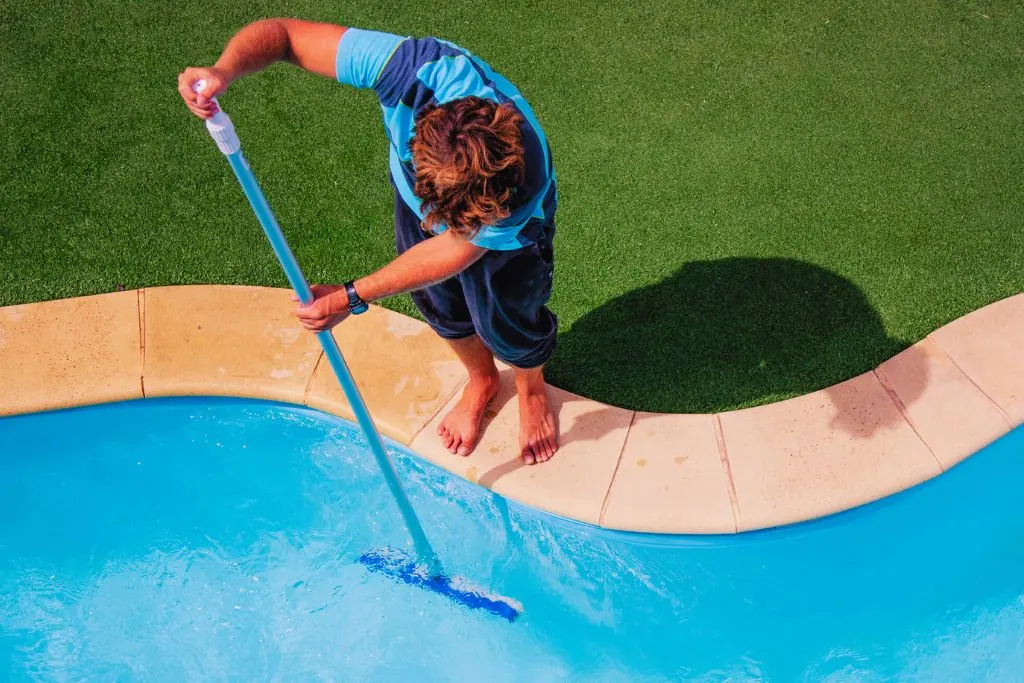
Every week! It makes a big difference in making sure your pool is always ready to jump into. Be sure to brush all the surfaces of your pool – the walls, floors and steps if you have them – it goes a long way to prevent algae and clean out debris.
Water Care Expert Tip: Always brush the floor from the shallow end toward the drain in the deep end. All debris collected while brushing should be pushed toward the main drain, where it will go to the filter.
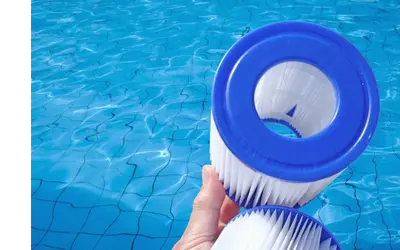
Your pool filter is one of the unsung heroes of pool care. It works behind the scenes to keep your water clean and clear. Regular filter maintenance isn’t just a good habit — it’s essential for water care and the longevity of your equipment.
The frequency of cleaning your pool filter depends on the type of filter you have and how often you use your pool — but as a general rule, you should clean your filter about once a month.
A couple of signs will also let you know when it’s time for a cleaning:
The method you’ll use to clean your pool filter depends on your filter type. The three most common kinds of pool filters are cartridge, sand and diatomaceous earth (D.E.) filters.
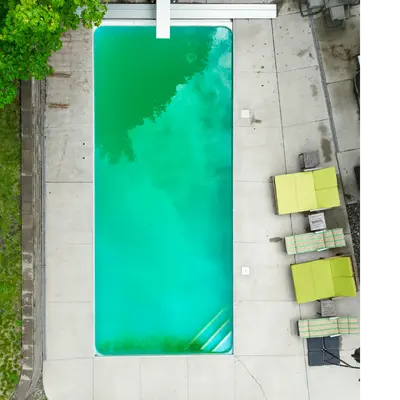
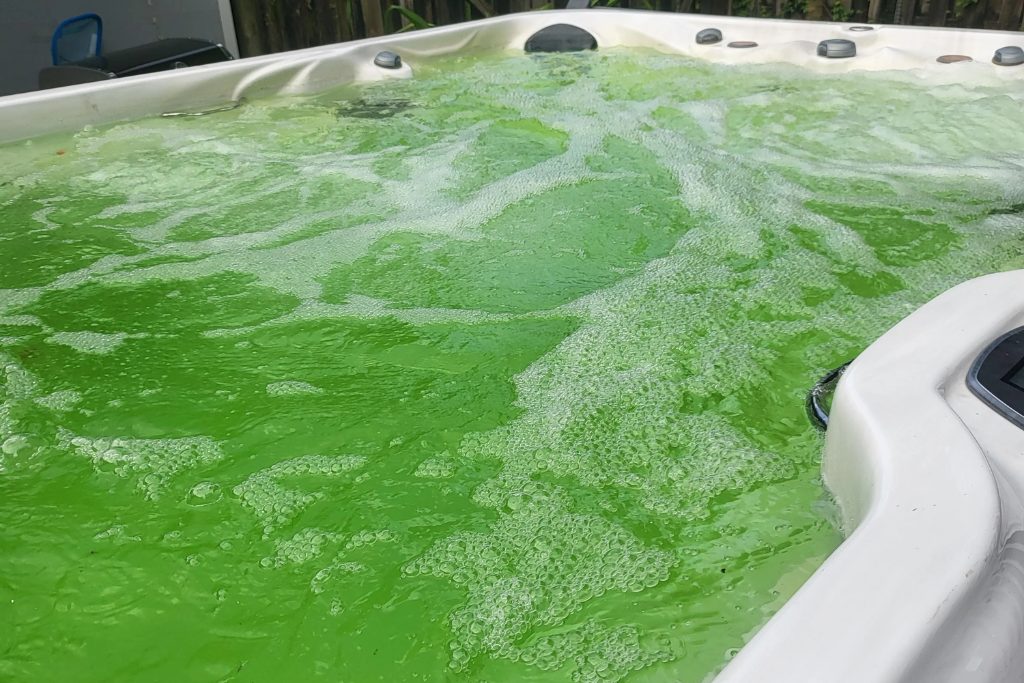
Algae can happen to anyone! The key is to act fast when you notice any signs of algae.
To get rid of pool algae, start by running your pool pump 24 hours a day to promote water circulation and distribute chemicals evenly. Then shock the pool with chlorine to raise free chlorine levels to at least 2-4 ppm and add an algaecide. This will help kill existing algae and prevent further growth.
For an algaecide, we recommend FROG® Algae Gone™. It’s easy, powerful and effective. Plus, it can be used in any pool – even if you don’t use FROG Products already. FROG Algae Gone comes in a prefilled Pod. All you need to do is Drop ‘n Go™ in your skimmer!
Water Care Expert Tip: Algae presence in your pool water means fluctuations in pH, so be sure your pool’s pH is between 7.2 and 7.6.
During this process, brush your pool surfaces at least twice a day to break up algae’s protective barrier. After you brush, be sure to vacuum to remove dead algae and debris, then clean or backwash the pool filter afterward to maintain good water flow and filtration. Continue this cycle until the water is clear!
For more detailed steps, read our blog “How to Get Rid of and Prevent Pool Algae.”
The best way to prevent algae in your pool is by sticking to a consistent, simple maintenance routine. Keep your water’s pH between 7.2 and 7.8, and ensure chlorine stays within the recommended range — 1 – 3 ppm for standard chlorine pools or 0.5 – 1.0 ppm with mineral systems like FROG. Balanced water keeps algae at bay and helps your pool chemicals work effectively.
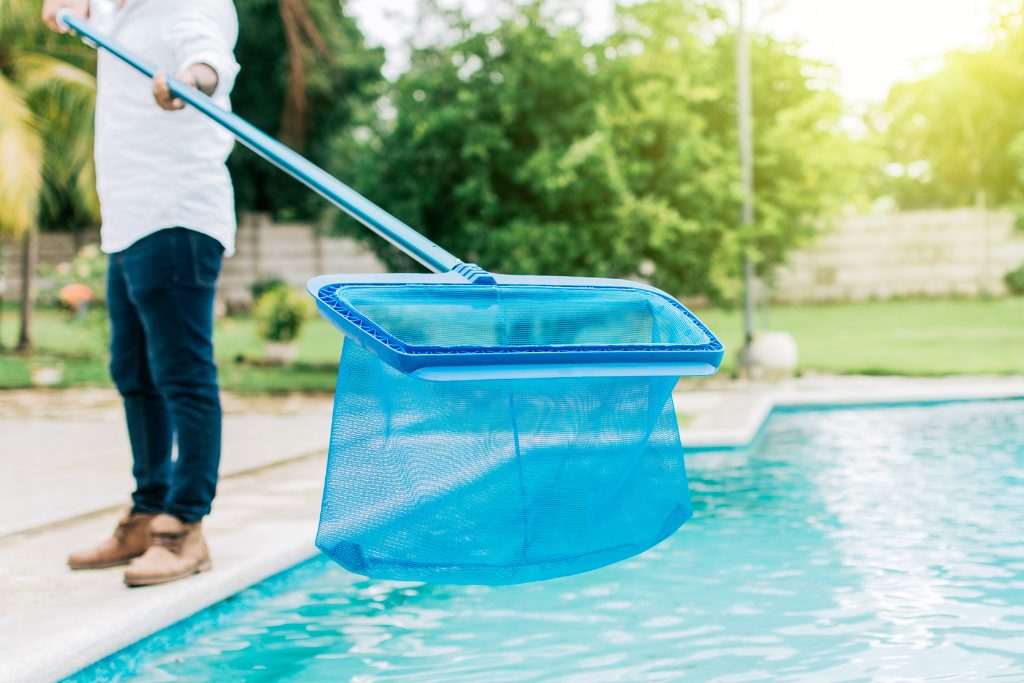
Clean or backwash your filter regularly to remove debris and organic matter, which algae feed on. Skim leaves, bugs and other debris as soon as you notice it, and if possible, use a pool cover when your pool isn’t in use.
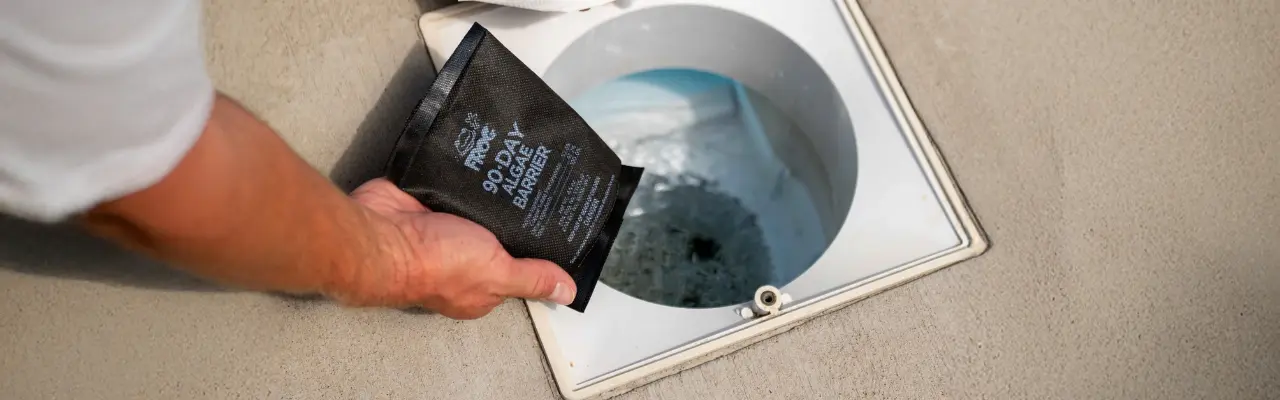
For extra protection, use an algae preventive treatment like FROG® 90-Day Algae Barrier™. It prevents algae for 90 Days – Guaranteed! It’s a dry, concentrated copper-based formula that goes to work fast and comes in a prefilled Pod. Just Drop ‘n Go in your pool’s skimmer!
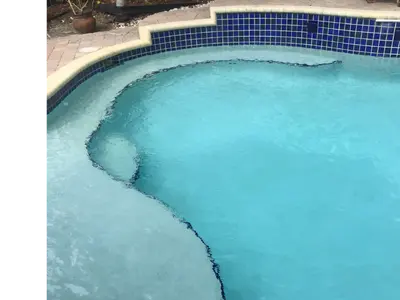
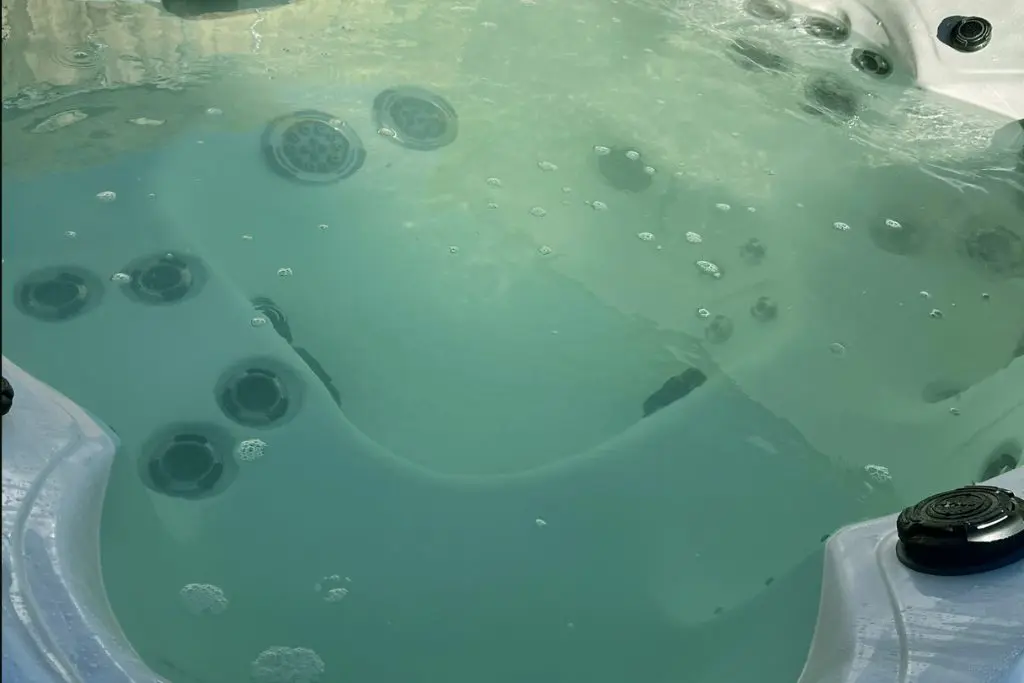
To fix cloudy pool water, start with water balance. Make sure Total Alkalinity, pH and Total Hardness are within their ideal ranges. Test and use adjustment chemicals as needed.
Low chlorine levels are a common cause of cloudiness, so shock the pool to quickly raise chlorine and sanitizer levels. Follow the manufacturer’s instructions for the correct dosage based on your pool size. Also, check that your pool filter is clean and working properly, as dirty or broken filters worsen water clarity.
Finally, increase your pump’s run time — ideally 24 hours a day until the water clears — to help circulate and filter the water. Vacuum debris from the pool floor and, if cloudiness persists, consider using a pool clarifier to gather tiny particles for easier filtration. With consistent care, your pool will be clear and inviting again in no time.
For more detailed steps read our blog “Cloudy Pool Water? Get Expert Tips for a Crystal Clear Pool”
A crystal clear pool is the result of consistent maintenance and balanced water chemistry. It’s also the key to preventing cloudy water. Here’s how to start a reliable pool maintenance routine:
Want an easy way to prevent cloudy pool water for 90 days at a time? Try out FROG® 90-Day GoodBye Cloudy™! It’s a dry, concentrated formula that removes particles that cause cloudiness – all in a Pool Pod. Just Drop ‘N Go in the skimmer and say goodbye to cloudy pool water for 90 days!
It’s best to close your pool when the outdoor temperature is consistently between 50◦F – 60◦F and your pool water temperature is consistently below 65◦F.
Cooler temperatures help prevent algae and bacteria growth.
Did you know there is such a thing as closing your pool too early? Many people see Labor Day weekend as pool closing weekend.
However, this may be too early in certain climates. If you close your pool too early, you may invite algae growth.
According to the Environmental Protection Agency, EPA, warmer water is easier for small organisms to move through and allows algae to float to the surface faster. Water temperatures in the 85◦F range gives algae and bacteria an invitation to curl up in a corner of the pool and begin growing.
If temperatures warm up to 65◦F and higher for a day or longer, algae can use up your winter chemicals early and start to accumulate.
But don’t wait too late to close your pool either – autumn temperatures can take a sudden dip below 32◦F, potentially causing expensive damage. Find the right time for your climate – and don’t hesitate to reach out to your local dealer for advice!
For more detailed steps on pool closing read our detailed blog post on just that here.
Pool care doesn’t have to be complicated. We hope we answered your burning questions so you can enjoy a stress-free pool season.
Got a question we didn’t cover? Reach out to our customer service team at 800-222-0169 Monday through Friday, 8 AM – 5 PM CST or visit your local FROG dealer (you can find yours here)
We’re always happy to help!
Subscribe to the Water Care Blog for tips from water care experts, promotions and fun stuff!
Sign up today for the latest and greatest in hot tub, swim spa and pool water care.







Write a Comment